

Products
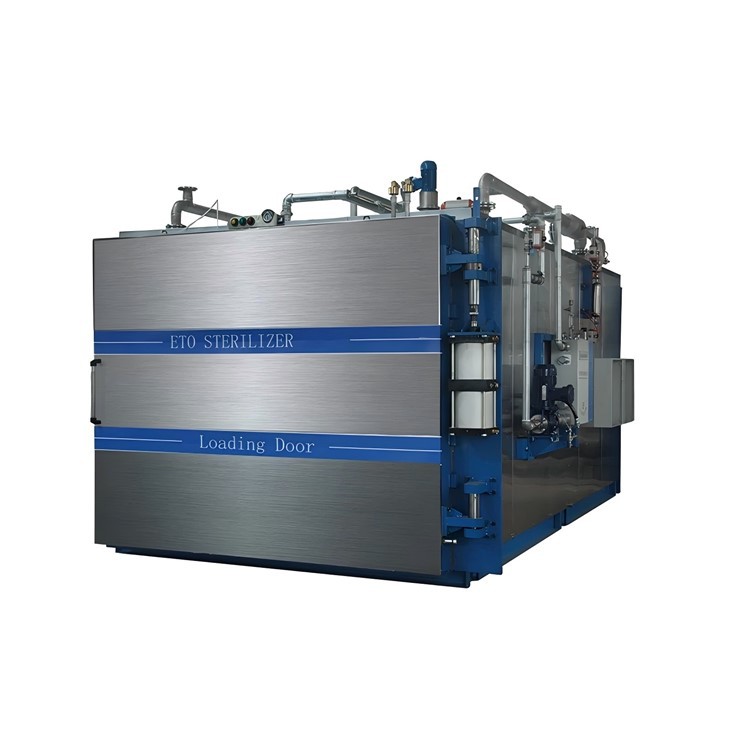
PVC Medical Device Sterilization EtO
PVC Medical Device EtO Sterilization is a low-temperature sterilization method designed for heat-sensitive PVC medical products such as tubing, masks, and fluid bags. By using ethylene oxide gas, it can penetrate complex structures and packaging to achieve thorough sterilization without affecting the material’s flexibility, transparency, or performance, making it a reliable solution for disposable medical devices.
Features
Hangzhou Riches Engineering Co., Ltd. is one of the leading manufacturers and suppliers of pvc medical device sterilization eto in China. With abundant experience, we warmly welcome you to wholesale durable pvc medical device sterilization eto for sale here from our factory. If you have any enquiry about custom service and ODM service, please feel free to email us.
Key Features
Excellent Compatibility with PVC
Low-temperature process prevents deformation, yellowing, or hardening, keeping PVC products flexible and visually stable.
Deep Penetration for Complex Designs
Effectively sterilizes tubing, narrow lumens, and multi-part assemblies by reaching internal and hard-to-access areas.
Dry Process, No Surface Damage
No moisture involved, avoiding condensation, stickiness, or surface defects on PVC materials.
Sterilization in Final Packaging
Penetrates breathable medical packaging, allowing products to be sterilized after sealing and reducing contamination risk.
Optimized Residual Control
Specially designed aeration process reduces EtO residues in PVC to meet safety and regulatory standards.
Scalable & Consistent Performance
Suitable for both small batches and mass production, with stable and repeatable sterilization results.
Why EtO is Ideal for PVC Devices
Maintains Material Stability
PVC can soften, warp, or yellow under high heat. EtO sterilization avoids thermal stress, helping retain clarity, flexibility, and mechanical strength.
No Moisture Impact
Unlike steam sterilization, EtO is a dry process. This prevents condensation-related issues such as surface marks, stickiness, or structural changes.
Effective Through Complex Structures
PVC medical products often include tubing, connectors, and multi-component assemblies. EtO gas penetrates narrow lumens and enclosed spaces with ease.
Compatible with Plasticizers
Properly controlled cycles minimize interaction with plasticizers, reducing the risk of material degradation or odor.
Technical Considerations for PVC
Sterilizing PVC is not just about killing microorganisms-it's about controlling side effects:
Residual Management
PVC can absorb EtO and by-products; optimized aeration is essential
Color Stability
Preventing yellowing or visual defects requires precise temperature control
Mechanical Integrity
Avoiding brittleness or softening during the cycle
Packaging Compatibility
Ensuring gas permeability while maintaining sterile barrier performance
FAQ
1. Why is EtO preferred for PVC medical devices?
Because it sterilizes effectively at low temperatures without deforming or damaging PVC materials.
2. Does EtO cause yellowing in PVC products?
Not when process parameters are properly controlled.
3. Is residue a concern for PVC?
Yes, PVC can absorb EtO, so proper aeration is essential to ensure safety.
4. Does EtO affect flexibility of PVC tubing?
No, it helps maintain flexibility compared to high-temperature methods.
5. How long is the aeration phase for PVC products?
Typically longer than other plastics, depending on thickness and design.
6. Is EtO suitable for large-scale production?
Yes, it is widely used in industrial sterilization of disposable medical products.
Hot Tags: pvc medical device sterilization eto, China pvc medical device sterilization eto manufacturers, suppliers, factory, EtO sterilization cabinet for PVC PE TPU medical items, EtO sterilization machine for anesthesia circuits, Ethylene Oxide Sterilization Machine, Hospital and Industrial ETO Sterilization Unit, Disposable syringe sterilization equipment, PVC medical device sterilization EtO
You Might Also Like
 Learn More
Disposable Injection Device Gas Sterilizer
-
Learn More
EtO Sterilization Machine For Anesthesia Circuits
-
Learn More
EtO Sterilizer For Anesthesia Circuits
 Learn More
EO Sterilization Equipment For Nonwoven Fabric Products
 Learn More
Large-Capacity EO Sterilisers
-
Learn More
Ethylene Oxide Sterilization
Send Inquiry
