

How We Design EO Sterilization Solutions For 1g Herbal Sachets At 6,000 Kg/Day
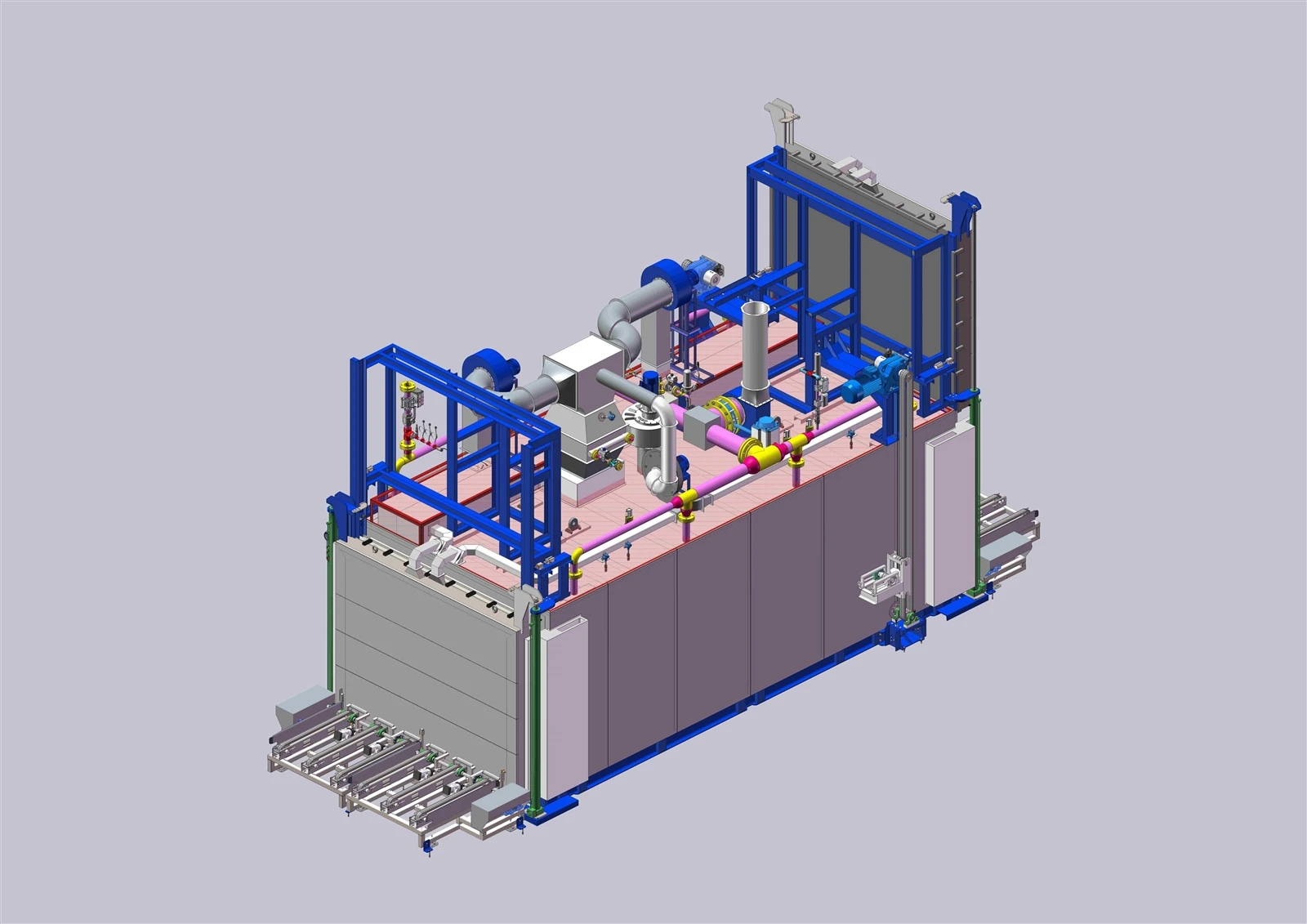
The Challenge of EO Treatment for Ground Dried Herbs
Ground dried herbs such as chamomile, fennel and tea fannings require careful microbial control while maintaining product quality. When these materials are packed into 1g sachets, the challenge becomes more than simply selecting an EO sterilization chamber.
The packaging material, product density, moisture content, initial bioburden and loading configuration can all affect EO penetration and process performance. For a production requirement of 6,000 kg per day, the equipment must also be designed around the required batch size and cycle time.
At Hangzhou Riches Engineering Co., Ltd., we develop EO sterilization systems by starting with these production conditions rather than applying a standard chamber configuration.
What We Analyze Before Equipment Design
Before developing the system, our engineers evaluate the product and packaging together.
For chamomile, fennel and tea products, we recommend confirming moisture content, particle size, bulk density, initial microbial load and temperature sensitivity. We also need the dimensions and material of the 1g sachet to evaluate EO permeability.
The customer should also define the required microbial reduction and applicable product requirements. This information helps us determine suitable process conditions instead of copying a cycle developed for another product.
Designing the Chamber Around 6,000 kg/Day Capacity
A daily capacity of 6,000 kg does not directly determine the chamber volume. We first convert daily production into batch capacity, loading volume and cycle time.
For example, the project may use several smaller batches or fewer high-capacity batches. Each configuration creates different requirements for chamber volume, pallet arrangement, loading density, gas distribution and aeration capacity.
Riches can customize the chamber dimensions and internal loading configuration according to the customer's actual production workflow. Our engineering process connects product quantity → batch size → loading arrangement → chamber volume → cycle time → daily throughput.
This allows the sterilization system to be designed as part of the production process rather than as an isolated piece of equipment.
EO Penetration, Aeration and Residual Control
For 1g sachets, packaging permeability is a critical consideration. EO must effectively reach the product through the packaging structure, while the process must remain controllable across the complete load.
Our EO system can integrate controlled vacuum, conditioning, humidity management, EO injection, exposure, evacuation and aeration stages. For products where aroma, flavor, color or volatile components are important, these characteristics should also be considered during process development.
After exposure, aeration is essential for removing residual EO and controlling ECH according to the customer's applicable requirements. Therefore, Riches evaluates the sterilization and aeration stages together when developing the system.
Riches Customized EO Sterilization Solutions
Riches provides customized EO sterilization equipment for industrial applications, including sterilization chambers, vacuum systems, EO injection systems, conditioning and humidity-control systems, exhaust systems, aeration systems and process-control solutions.
For a 6,000 kg/day herbal product project, we can work from the customer's product specifications, packaging structure and production targets to develop the appropriate chamber configuration and supporting systems.
From technical requirement analysis and chamber design to equipment manufacturing, commissioning and validation-related support, Riches focuses on building an EO processing solution around the customer's actual production conditions.
If you are processing chamomile, fennel, tea fannings or other dried herbal products in small sachets, provide us with your sachet material, product moisture, batch quantity, microbial target and daily capacity. Riches can use these parameters to evaluate the required EO sterilization chamber and develop a production-oriented solution.
No Information


