

Industrial EO Sterilizer Manufacturer: Riches Strengthens Medical Device Sterilization Solutions Through Engineering And Manufacturing Capabilities
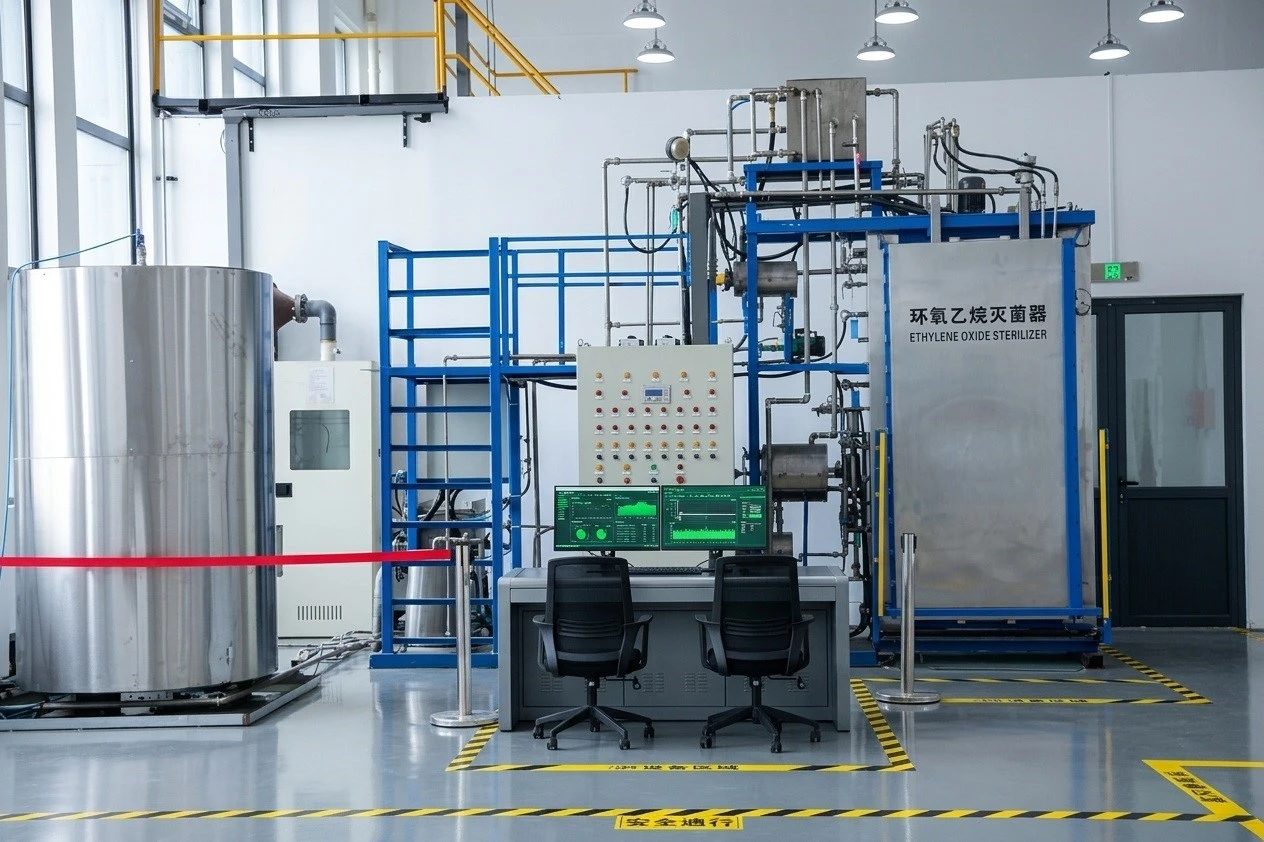
Industrial EO Sterilization in Medical Device Manufacturing
Sterilization is an essential manufacturing process for disposable medical devices and healthcare consumables. Products such as disposable syringes, medical tubing, catheters, surgical accessories, and other single-use medical products require controlled sterilization processes before they can enter the medical supply chain.
Ethylene oxide (EO) sterilization is widely used for medical devices that may not be suitable for conventional high-temperature sterilization methods. Its gas penetration characteristics make it applicable to products with complex structures, narrow internal passages, and certain types of medical packaging.
For manufacturers producing packaged medical devices, sterilization requirements involve more than selecting an appropriate sterilization chamber. The complete process must consider product materials, packaging permeability, loading configurations, temperature, humidity, EO exposure, and post-sterilization aeration.
These factors create demand for industrial EO sterilization equipment that can support controlled processing conditions and repeatable production cycles.
As an industrial EO sterilizer manufacturer, Riches Engineering focuses on equipment design, manufacturing, system integration, and engineering solutions for medical device sterilization applications.
Riches Engineering: Industrial EO Sterilizer Manufacturing Capabilities
Riches Engineering specializes in the design and manufacturing of industrial ethylene oxide sterilization equipment for medical device manufacturers and sterilization facilities.
The manufacturing approach covers the main equipment structure, sterilization chamber fabrication, auxiliary systems, automation components, and integrated process configurations.
Industrial Sterilization Chamber Manufacturing
The sterilization chamber is the central component of an EO sterilizer. Its structure must withstand repeated vacuum and pressure cycles while maintaining the sealing performance required for controlled gas processing.
Manufacturing considerations include:
Chamber dimensions and internal configuration.
Stainless steel material selection.
Chamber wall thickness and structural reinforcement.
Welding procedures and joint quality.
Door structure and sealing arrangements.
Internal surface treatment and cleaning requirements.
Connections for vacuum, gas supply, and process instrumentation.
The chamber design must be evaluated according to operating pressure, structural loading, applicable safety requirements, and the intended sterilization process.
Customized Equipment Manufacturing
Different medical products require different loading arrangements and chamber configurations.
Riches develops equipment solutions based on product dimensions, loading requirements, process conditions, and available installation space.
Depending on project requirements, the equipment can be configured with different chamber capacities, loading systems, gas supply arrangements, and supporting process equipment.
This engineering-led approach allows manufacturers to select equipment configurations according to their actual production needs rather than relying on a fixed standard layout.
Engineering Design for Different Medical Device Applications
Medical devices differ in material composition, product geometry, packaging structure, and sterilization requirements. These differences influence how EO gas enters the product packaging and reaches the surfaces requiring sterilization.
Riches considers the intended application during the equipment design and process planning stages.
Disposable Syringes and Blister-Packed Medical Devices
Disposable syringes are common applications for industrial EO sterilization.
When syringes are sterilized in blister packaging, the packaging structure becomes an important part of process development. The packaging materials must allow sufficient EO gas penetration while maintaining their protective function after sterilization.
Engineering considerations include:
Blister tray and sealing material compatibility.
Product arrangement and loading density.
Gas penetration through packaging materials.
Temperature and humidity distribution.
EO exposure conditions.
Post-sterilization aeration requirements.
The sterilization process must be developed and validated for the specific product and packaging configuration. Equipment capability alone does not establish product sterility.
Other Medical Consumables
Industrial EO sterilizers can also support the processing of different medical consumables, subject to material compatibility and validated process conditions.
Potential applications include:
Medical tubing and catheter assemblies.
Disposable surgical accessories.
Medical protective products.
Plastic medical components.
Single-use medical kits.
Other temperature-sensitive medical devices.
For manufacturers handling multiple product categories, equipment flexibility and controlled process management are important considerations when planning sterilization capacity.
Integrated EO Sterilization Systems and Process Solutions
An industrial EO sterilization facility requires coordinated equipment and process systems. The sterilization chamber is only one part of the overall production arrangement.
Riches approaches EO sterilization projects through system-level engineering, considering the relationship between product preparation, gas delivery, sterilization, gas removal, aeration, and exhaust treatment.
Preconditioning and Humidity Control
Preconditioning prepares products for the sterilization cycle by bringing them to specified temperature and humidity conditions.
Humidity is an important process variable because moisture influences the effectiveness of EO sterilization. The required conditions depend on the product, packaging, and validated sterilization cycle.
EO Gas Supply and Distribution
The gas supply system introduces EO into the sterilization chamber under controlled operating conditions.
Its engineering design considers gas delivery, metering, pressure regulation, distribution, and safety controls.
Different product applications may require different EO gas concentrations and process parameters. The gas supply arrangement must therefore match the intended sterilization process.
Vacuum and Sterilization Process Control
Vacuum operations help remove air from the chamber and support the introduction and distribution of EO gas.
The sterilization process involves coordinated control of critical parameters, including:
Chamber temperature.
Relative humidity.
Pressure and vacuum levels.
EO gas concentration or validated gas dosing parameters.
Exposure time.
These parameters must be established through product-specific process development and validation.
Aeration and Residual Gas Management
After EO exposure, residual EO and related substances must be reduced to acceptable levels before products are released.
Aeration conditions depend on product materials, packaging, loading density, and applicable residual limits.
For this reason, aeration capacity and process configuration should be considered during the initial equipment planning stage.
Exhaust Gas Treatment
EO exhaust treatment is another important part of industrial sterilization system design.
The exhaust treatment configuration should be selected according to gas concentration, exhaust flow, operating conditions, and applicable environmental requirements.
Riches considers exhaust handling and treatment as part of the overall engineering solution rather than an isolated accessory.
Automation and Safety in Industrial EO Sterilization
Industrial EO sterilization requires coordinated control of multiple process parameters. Automation helps operators manage sterilization cycles, monitor operating conditions, and maintain process records.
Riches integrates PLC-based control systems and HMI interfaces according to equipment configuration and project requirements.
PLC and HMI Control
The control system can be designed to manage key process operations, including:
Vacuum and pressure control.
Temperature regulation.
Humidity monitoring and control.
EO gas supply operations.
Sterilization cycle timing.
Process alarms and operating status.
Historical process data recording.
The HMI provides operators with access to equipment status, process settings, alarm information, and operating records.
Safety Interlocks and Equipment Protection
EO is a hazardous gas, so equipment safety must be considered throughout the design and manufacturing process.
Depending on the system configuration, safety engineering may include:
Door locking and interlocking mechanisms.
Pressure and vacuum protection.
EO gas supply interlocks.
Gas leakage detection interfaces.
Ventilation and exhaust control.
Emergency shutdown functions.
Alarm monitoring and fault protection.
These functions help manage equipment operating risks and support controlled operation within the specified safety conditions.
Supporting Medical Device Manufacturers with Customized Solutions
Medical device manufacturers have different production capacities, product portfolios, facility layouts, and regulatory requirements. A suitable EO sterilization system must account for these differences.
Riches develops project-specific solutions by evaluating several engineering factors.
Production Requirements: Chamber capacity, batch loading volume, processing frequency, and expected production output.
Product Characteristics: Product dimensions, materials, packaging structures, and compatibility with EO sterilization.
Facility Conditions: Available installation space, utilities, ventilation, gas supply, and equipment access.
Process Requirements: Temperature, humidity, vacuum, EO exposure, aeration, and exhaust treatment.
Validation Requirements: Equipment qualification, process validation, calibration, and documentation according to the applicable project standards.
This information provides the basis for equipment selection and system configuration.
Rather than treating an EO sterilizer as an isolated machine, Riches considers the complete relationship between equipment, product characteristics, sterilization processes, and manufacturing operations.
Riches Engineering: From Equipment Manufacturing to Technical Support
Industrial EO sterilization projects require coordination between equipment manufacturing, engineering design, process requirements, installation, and technical services.
Riches Engineering supports customers through different stages of an industrial sterilization project.
Its engineering and manufacturing scope can include:
Industrial EO sterilizer design and manufacturing.
Customized sterilization chamber configurations.
EO gas supply and process control systems.
Preconditioning and aeration solutions.
Exhaust gas treatment integration.
PLC and HMI automation.
Installation and commissioning support.
IQ/OQ documentation and qualification support.
Calibration and technical assistance.
For medical device applications, validation activities must be planned according to the intended products, packaging systems, sterilization processes, and applicable regulatory standards.
ISO 11135 provides a framework for the development, validation, and routine control of EO sterilization processes for medical devices. Product-specific validation remains necessary to demonstrate that the selected process achieves the required sterility assurance level without compromising product functionality or packaging integrity.
By combining industrial equipment manufacturing with application-oriented engineering, Riches aims to provide EO sterilization solutions that address the operational requirements of medical device manufacturers.
Whether the application involves disposable syringes, blister-packed medical products, or other single-use medical consumables, equipment configuration and process development should be based on actual product and production conditions.
Riches Engineering provides industrial EO sterilization equipment and engineering solutions for medical device manufacturing applications, supporting customers from equipment design and manufacturing to system integration and technical services.
No Information


