

Customized Industrial EO Sterilization Solution For Medical Devices in Bolivia
Project Background: Medical Device Sterilization Requirements in Bolivia
The medical device industry requires controlled sterilization processes to ensure that single-use medical products can be supplied for clinical and healthcare applications. Products such as surgical gloves, syringes, intravenous catheters, surgical gowns, medical drapes and sterile surgical kits often require sterilization methods that can penetrate packaged products and accommodate different material structures.
For medical device manufacturers and sterilization service providers, ethylene oxide (EO) sterilization is an important processing option, particularly for products that are sensitive to high temperatures or moisture exposure.
In Bolivia, the development of medical device sterilization facilities requires equipment that can accommodate different product categories, maintain controlled processing conditions and support internationally recognized sterilization validation requirements.
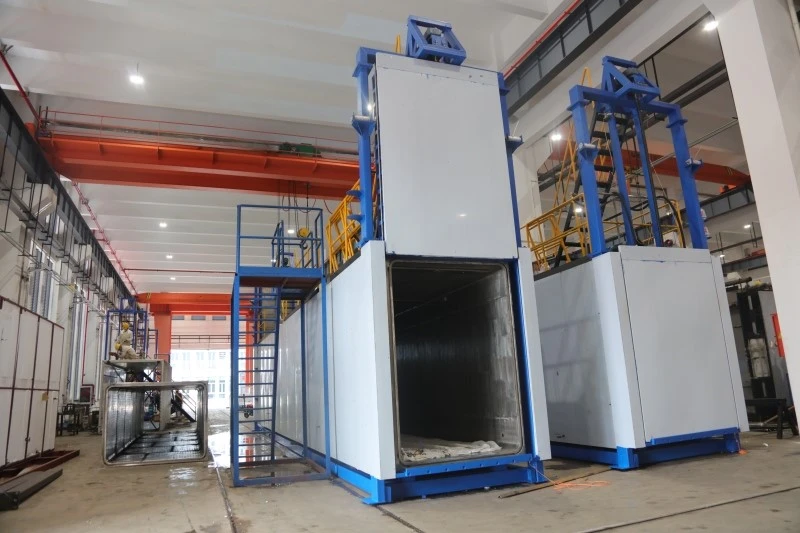
Riches developed a proposed industrial EO sterilization solution for a medical device sterilization center in Bolivia. The engineering concept focused on two sterilization chambers with different usable volumes, together with supporting preconditioning rooms, aeration facilities, EO emission treatment and automated process control.
Rather than supplying individual sterilization machines, Riches approached the project as an integrated sterilization system designed around the customer's product range, operational requirements and future production needs.
Understanding the Customer's EO Sterilization Needs
Before selecting equipment specifications, Riches needed to understand the relationship between product characteristics, loading configurations, sterilization capacity and process requirements.
The proposed facility was intended to process several categories of single-use medical devices, including:
Medical gloves and disposable protective products
Syringes and intravenous catheters
Surgical gowns and medical drapes
Sterile surgical kits and packaged medical supplies
These products differ in packaging materials, dimensions, loading density and EO penetration characteristics. Consequently, a single fixed chamber configuration would not necessarily provide the flexibility required for different production batches.
Riches identified several engineering priorities.
Different chamber capacities: The project required two chambers with approximately 10 m³ and 20 m³ of usable internal volume. This arrangement would allow the operator to select a chamber according to batch size and product configuration.
Controlled product conditioning: Medical device packaging and product materials require suitable temperature and humidity conditions before EO exposure. A dedicated preconditioning arrangement was therefore included.
Post-sterilization aeration: Residual EO and related process by-products must be reduced to appropriate levels before products are released. The aeration system needed to accommodate the expected chamber output.
Process documentation: The equipment and process design needed to support validation activities under ISO 11135, including installation, operational and performance qualification.
These requirements became the basis for Riches' proposed equipment configuration.
Customized Dual-Chamber EO Sterilization System
Two Chamber Sizes for Different Production Batches
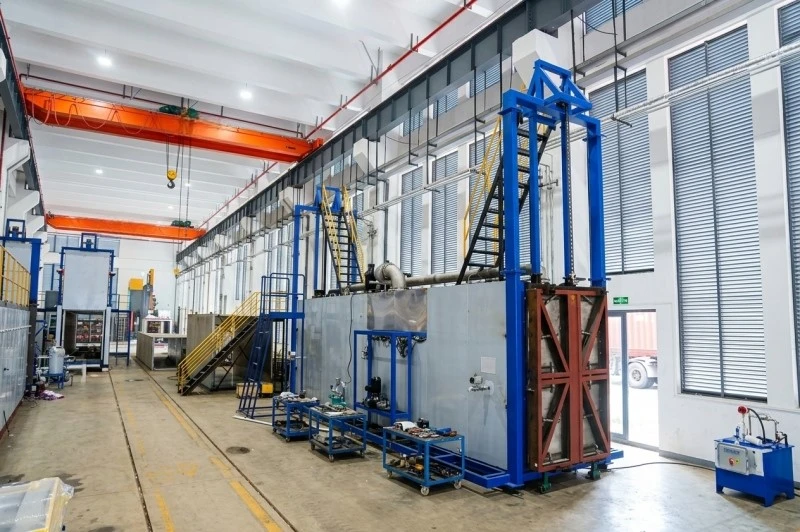
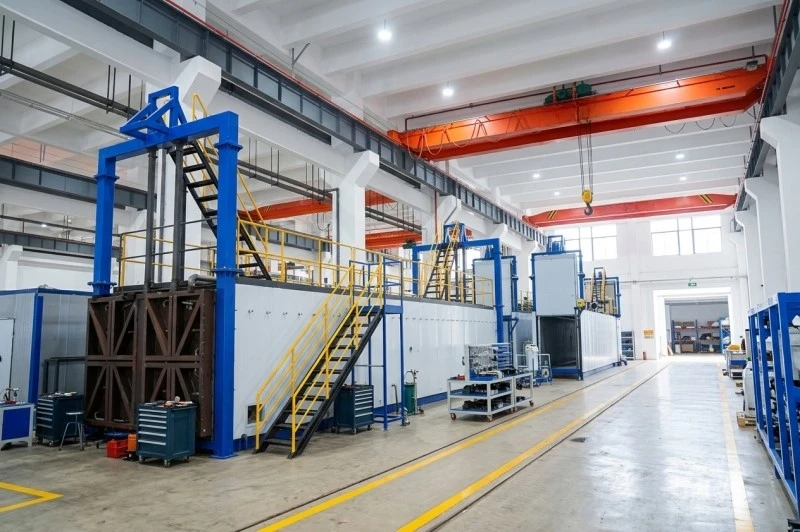
Riches proposed a dual-chamber configuration consisting of:
One industrial EO sterilization chamber with approximately 10 m³ usable volume
One industrial EO sterilization chamber with approximately 20 m³ usable volume
The two chamber sizes provide operational flexibility for different medical device production batches.
The smaller chamber can be assigned to relatively compact production loads or product categories requiring separate processing arrangements. The larger chamber can accommodate higher-volume batches, subject to validated loading configurations and product compatibility.
Customized Dual-Chamber EO Sterilization SystemCustomized Pallet Loading Configuration
Chamber volume alone does not determine actual production capacity. The usable loading space, pallet dimensions, product packaging and spacing between loads also affect the number of products that can be processed in one cycle.
Riches would develop the pallet loading arrangement based on:
Internal chamber dimensions
Pallet length, width and height
Product carton dimensions
Maximum loading height
Required spacing between pallets
Gas circulation and EO penetration considerations
The objective is to maximize usable loading capacity without creating densely packed areas that could interfere with sterilant distribution.
The final pallet quantity and arrangement would be confirmed through engineering drawings, representative product samples and process development.
Chamber Structure and Process Control
The industrial EO sterilization chambers would be configured with controlled process parameters, including temperature, relative humidity, pressure and EO exposure conditions.
The chamber system would also incorporate vacuum and gas injection functions, together with the necessary safety interlocks and process monitoring components.
The specific cycle parameters would be established through product compatibility assessments, process development and validation rather than applying one universal sterilization recipe to every medical device.
Preconditioning and Aeration System Configuration
Preconditioning and aeration are essential supporting processes in an industrial EO sterilization facility. They directly influence production scheduling, process consistency and product release requirements.
Preconditioning Room Design
Riches included dedicated preconditioning room capacity in the proposed system.
Before sterilization, medical device products are transferred into the preconditioning area, where environmental conditions are controlled to prepare the products for the subsequent EO cycle.
The system design considers:
Temperature control
Relative humidity regulation
Air circulation
Product loading arrangements
Environmental monitoring
Batch identification and transfer procedures
Preconditioning capacity would be coordinated with both sterilization chambers to reduce unnecessary waiting time between production stages.
Aeration and Degassing Room Design
Following EO exposure, products require aeration to reduce residual ethylene oxide and relevant by-products.
Riches proposed dedicated aeration facilities sized according to the expected output of the 10 m³ and 20 m³ chambers.
The engineering design would consider product type, packaging materials, residual EO limits, aeration temperature, air exchange and the time required to achieve the specified product release criteria.
The aeration capacity must be evaluated together with chamber cycle time. Increasing sterilization chamber capacity without providing sufficient aeration capacity can create a production bottleneck.
For this reason, Riches treated sterilization and aeration as interconnected parts of the same production system.
EO Gas Supply and Emission Treatment Solutions
EO Gas Supply Configuration
The customer requested an assessment of 100% EO gas and EO/CO2 mixtures.
Riches would evaluate both options based on the sterilization process, product compatibility, equipment configuration, local gas availability and applicable safety regulations.
The gas supply system would include the necessary storage and connection arrangements, pressure regulation, gas delivery components, isolation valves and safety controls.
The final gas selection would be confirmed during process engineering to ensure compatibility with the intended sterilization cycles and facility safety requirements.
EO Emission Treatment System
EO exhaust treatment is another important part of industrial sterilization facility design.
Riches proposed evaluating two treatment technologies:
Catalytic EO Abatement
Catalytic treatment uses controlled reaction conditions to decompose EO in the exhaust stream. The system configuration would be selected according to exhaust flow, inlet concentration, operating conditions and applicable emission limits.
Acid Scrubber System
An acid-scrubber system uses a suitable absorption process to remove EO from exhaust gas. Its design requires consideration of gas-liquid contact, treatment capacity, chemical circulation and wastewater handling.
The selection between catalytic treatment and acid scrubbing would depend on the facility's emission requirements, operating conditions and local environmental regulations.
Treatment efficiency would be specified against defined inlet and outlet conditions rather than using an unsupported general efficiency figure.
EO Detection and Alarm System
Riches also included an EO gas detection and alarm arrangement in the proposed engineering scope.
Gas detectors would be positioned according to the facility's hazardous-area assessment and potential EO leakage locations.
The safety system would support:
EO concentration monitoring
Audible and visual alarms
Emergency isolation procedures
Ventilation and safety interlocks
Operator warning and emergency response procedures
This approach integrates gas monitoring into the overall facility safety design.
PLC Automation and Process Safety Design
For an industrial medical device sterilization facility, process control must cover more than basic machine operation.
Riches proposed a PLC-based control architecture with an operator interface and supervisory monitoring functions.
The system would monitor and record important process parameters, including:
Chamber temperature
Relative humidity
Chamber pressure and vacuum
EO gas injection conditions
Sterilization exposure time
Process stage transitions
Alarm and fault records
The control sequence would manage the sterilization cycle through defined operating stages, including initial vacuum, humidification, EO injection, exposure, gas removal and subsequent evacuation or washing stages according to the selected process design.
Electronic Records and Audit Trail
The customer's requirement for 21 CFR Part 11 or an equivalent electronic record system was included in the automation assessment.
The proposed control architecture would be evaluated for user access management, electronic records, audit trail functions, data backup and controlled record retrieval.
Where required, the system would be configured and documented to support the applicable electronic records and electronic signatures requirements.
Explosion-Proof Engineering
EO is a flammable gas, so explosion protection must be considered throughout the facility design.
Riches would review the hazardous-area classification and identify the equipment and electrical components requiring appropriate explosion-protection measures.
The engineering scope would consider gas supply connections, electrical installations, ventilation, emergency isolation and safety interlocks.
The final protection specifications would be determined according to the applicable local codes and relevant international standards.
ISO 11135 Validation and Documentation Support
ISO 11135 establishes requirements for the development, validation and routine control of ethylene oxide sterilization processes for medical devices.
For this project, Riches included validation support as an important part of the proposed equipment package.
Installation Qualification (IQ)
IQ activities verify that the equipment has been installed according to the approved design and manufacturer specifications.
The supporting documentation may include:
Equipment specifications
Approved equipment drawings
Component and instrument lists
Utility connection requirements
Installation inspection records
Calibration documentation
Operational Qualification (OQ)
OQ evaluates whether the sterilization equipment operates within its specified operating ranges.
Testing may cover temperature distribution, pressure control, vacuum performance, humidity control, gas injection functions, alarm responses and control system operation.
The results provide evidence that the equipment can operate according to its intended design.
Performance Qualification (PQ)
PQ evaluates the sterilization process using defined product loads and process conditions.
For medical device applications, this may involve product-specific load configurations, biological indicators, process challenge devices and microbiological testing under an approved validation protocol.
The final validation strategy must be developed with the customer's quality and microbiology teams and conducted under the applicable requirements.
FAT and SAT
Riches also proposed Factory Acceptance Testing (FAT) and Site Acceptance Testing (SAT).
FAT would allow the customer to review equipment functions and control logic before shipment.
SAT would verify the installed equipment and its operation after arrival at the facility.
These activities help connect equipment manufacturing requirements with the customer's final installation and qualification program.
Installation, Commissioning and Technical Training
An industrial EO sterilization facility requires coordinated installation of the chamber equipment, gas supply, utility systems, emission treatment equipment and control infrastructure.
Riches included technical installation and commissioning support in the proposed project scope.
The installation planning would cover:
Site Preparation: Review of equipment layout, building height, floor loading, foundations, access routes, safety distances and utility connection points.
Equipment Installation: Positioning of the sterilization chambers, preconditioning facilities, aeration rooms, gas supply equipment and emission treatment system.
Utility Connection: Integration of electrical power, steam, water, compressed air, vacuum and other required services according to the approved equipment specifications.
System Commissioning: Verification of mechanical functions, electrical connections, control logic, safety interlocks, gas detection and process monitoring.
Operator Training: Training covering equipment operation, batch loading, process monitoring, alarm handling, routine maintenance and emergency response.
Riches would also prepare a recommended two-year spare parts list covering critical instruments, valves, seals, filters and other maintenance components according to the final equipment configuration.
An Integrated EO Sterilization Solution by Riches
This Bolivia medical device sterilization project demonstrates the engineering considerations involved in developing an industrial EO sterilization facility.
The proposed solution combines two sterilization chambers with approximately 10 m³ and 20 m³ usable volumes, dedicated preconditioning and aeration capacity, EO gas supply, emission treatment, gas detection, automated process control and ISO 11135 validation support.
For Riches, the key engineering task is to coordinate these individual systems into one operational facility.
Chamber capacity must match the product loading arrangement. Preconditioning and aeration capacity must support the expected production schedule. EO emission treatment must meet the applicable environmental requirements. Automation and documentation must support controlled operation and process traceability.
As an EO sterilizer manufacturer and engineering solution provider, Riches develops equipment configurations according to the customer's medical device applications, production requirements, facility conditions and validation objectives.
From individual EO sterilization chambers to integrated industrial sterilization systems, Riches provides customized engineering support covering equipment design, system configuration, manufacturing, commissioning and technical documentation.


