

Common EO Sterilization Validation Requirements for Medical Manufacturers
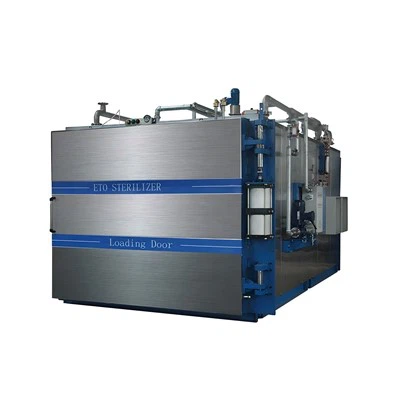
In the global medical device industry, sterilization validation is no longer just a regulatory requirement - it has become a core part of product quality assurance and international market access. Among all low-temperature sterilization technologies, ethylene oxide (EO/EtO) sterilization remains one of the most widely used methods for heat-sensitive and complex medical devices due to its excellent penetration capability and broad material compatibility.
However, EO sterilization is also one of the most strictly regulated sterilization processes in the medical field. Manufacturers must prove that every sterilization cycle consistently achieves sterility assurance while controlling EO residuals, environmental emissions, and product safety. This is why EO sterilization validation has become a critical process for medical manufacturers worldwide.
Selecting the Right EO Sterilization Partner
Choosing an experienced sterilization engineering partner can significantly reduce validation risks and project delays.
Medical manufacturers should evaluate suppliers based on:
- ISO 11135 experience
- Engineering capability
- Automation integration
- Safety systems
- Documentation support
- Global project experience
- After-sales service
Hangzhou Riches Engineering Co., Ltd. has become a recognized EO sterilization solution provider by offering customized EO sterilizers, turnkey engineering projects, automation systems, validation support, and international-standard compliance services. The company provides sterilization solutions for medical consumables, laboratory devices, pharmaceutical products, and industrial applications worldwide.
Their services include:
- EO sterilization chamber design
- Preconditioning systems
- Aeration rooms
- EO scrubber systems
- Installation and commissioning
- Validation support
- Operator training
- Technical lifecycle support
This integrated engineering approach helps manufacturers reduce implementation complexity while improving regulatory readiness.
Why EO Sterilization Validation Matters
Validation is the documented evidence that an EO sterilization process can reliably achieve the required Sterility Assurance Level (SAL). In medical manufacturing, even a small sterilization failure can lead to product recalls, regulatory penalties, or patient safety risks.
Validation ensures that:
- The sterilization cycle consistently eliminates microorganisms
- Product materials are not damaged during processing
- EO residuals remain within acceptable limits
- The process complies with global regulations
- Production batches remain repeatable and traceable
For medical device exporters targeting markets such as the United States, Europe, Japan, and Southeast Asia, validated EO sterilization systems are essential for regulatory approval.
Key International Standards for EO Sterilization Validation
Medical manufacturers usually follow several major international standards during validation.
ISO 11135
ISO 11135 is considered the primary international standard for EO sterilization validation. It defines requirements for:
- Process development
- Validation activities
- Routine monitoring
- Requalification
- Product family grouping
- Parametric release
The standard emphasizes risk-based sterilization process control and documentation consistency.
ISO 10993-7
This standard focuses on EO residual testing. Since EO gas can remain inside packaging materials and polymers after sterilization, manufacturers must verify that residual EO, ECH, and EG levels remain within safe biological limits.
ISO 13485
ISO 13485 covers quality management systems for medical device manufacturers. EO validation documentation is often reviewed during ISO 13485 audits.
FDA Guidance
For companies exporting to the United States, FDA inspectors commonly review sterilization validation protocols, biological indicator data, and cycle development records during facility audits.
The Three Main Stages of EO Sterilization Validation
EO sterilization validation is generally divided into three major qualification stages.
1. Installation Qualification (IQ)
IQ verifies that the sterilization equipment is installed correctly according to engineering specifications.
This stage typically includes:
- Chamber dimension verification
- Utility confirmation
- Electrical system checks
- Vacuum system testing
- EO gas injection verification
- Sensor calibration
- Safety interlock testing
At this stage, manufacturers also confirm that the sterilizer matches approved engineering drawings and operating requirements.
Companies such as Riches Engineering provide turnkey installation services including equipment commissioning, automation debugging, and engineering integration support.
2. Operational Qualification (OQ)
OQ confirms that the sterilizer operates correctly under defined operating ranges.
Critical parameters tested during OQ include:
- Temperature distribution
- Humidity control
- Vacuum depth
- EO concentration
- Gas exposure time
- Chamber pressure stability
Manufacturers usually perform empty chamber and loaded chamber testing to confirm process consistency.
One important goal of OQ is identifying the "worst-case conditions" for sterilization effectiveness.
3. Performance Qualification (PQ)
PQ is the final and most important stage.
During PQ, manufacturers prove that the validated cycle can sterilize actual product loads repeatedly under routine production conditions.
PQ commonly includes:
- Biological indicator (BI) testing
- Half-cycle validation
- Microbial challenge studies
- Product load configuration testing
- Packaging validation
- Residual analysis
Most regulatory authorities require multiple successful PQ runs before commercial production approval.
Biological Indicators in EO Validation
Biological indicators are essential for EO sterilization validation.
The most common microorganism used is:
Bacillus atrophaeus
This organism is highly resistant to EO gas, making it ideal for challenge testing.
During validation:
- BIs are placed in the most difficult-to-sterilize locations
- The sterilization cycle is intentionally shortened during half-cycle studies
- Complete BI inactivation demonstrates sterilization effectiveness
Accurate BI placement strategy is extremely important because medical products often have complex geometries and multilayer packaging structures.
Product Family Grouping Strategy
Many manufacturers produce hundreds of medical device SKUs. Validating every individual product would be extremely expensive and time-consuming.
To improve efficiency, manufacturers often use product family grouping.
Products may be grouped based on:
- Material composition
- Packaging type
- Density
- Geometry
- EO penetration difficulty
The "worst-case product" within the group is selected for validation testing.
This approach significantly reduces validation costs while maintaining regulatory compliance.
EO Residual Testing Requirements
EO sterilization is highly effective, but residual EO gas must be carefully controlled.
After sterilization, products usually undergo aeration to remove trapped EO gas.
Residual testing evaluates:
- Ethylene Oxide (EO)
- Ethylene Chlorohydrin (ECH)
- Ethylene Glycol (EG)
Residual limits vary depending on:
- Device contact duration
- Patient exposure type
- Product category
Improper aeration may lead to excessive residuals, delayed product release, or regulatory rejection.
Modern sterilization systems now include advanced aeration chambers and automated exhaust systems to improve degassing efficiency.
According to Riches Engineering EO System Solutions, integrated aeration rooms and EO scrubber systems are becoming standard configurations in modern EO sterilization projects.
Environmental and Safety Compliance
EO gas is flammable and toxic, so environmental safety is a major concern.
Manufacturers must implement:
- Gas leak monitoring systems
- Explosion-proof electrical designs
- Exhaust gas treatment systems
- Emergency shutdown procedures
- Ventilation systems
- Operator protection protocols
Many countries now require strict EO emission monitoring.
As environmental regulations tighten globally, medical manufacturers increasingly prefer sterilization suppliers that provide integrated gas treatment and environmental protection systems.
Common Validation Challenges for Medical Manufacturers
Complex Product Structures
Devices such as catheters, tubing sets, and multilumen products can create sterilization penetration challenges.
Packaging Compatibility
Packaging materials must allow EO penetration while maintaining sterile barrier integrity.
Cycle Optimization
Overexposure may damage materials, while underexposure may fail sterilization requirements.
Validation Documentation
Incomplete protocols or missing data are common audit findings during inspections.
Scaling Production
When production volume increases, load configurations often change, requiring revalidation.
How Automation Is Improving EO Validation
Modern EO sterilization systems increasingly use intelligent automation technology.
Advanced systems now provide:
- PLC-based process control
- Real-time monitoring
- Automated recipe management
- Data logging
- Remote diagnostics
- Electronic batch records
These technologies improve repeatability and simplify audit preparation.
According to Riches Engineering Supply Capability, modern EO systems now integrate automation control, validation support, and lifecycle technical services into turnkey projects for global medical manufacturers.
Requalification Requirements
EO sterilization validation is not a one-time activity.
Manufacturers must perform periodic requalification when:
- Equipment is modified
- Packaging changes
- Product materials change
- Load configurations change
- Major maintenance occurs
- Annual review schedules are reached
Routine monitoring data also plays an important role in maintaining validated status.
FAQ
1. What is the main purpose of EO sterilization validation?
EO sterilization validation is used to prove that the sterilization process can consistently achieve the required sterility assurance level (SAL) for medical devices. It ensures patient safety, regulatory compliance, and stable production quality while confirming that products remain safe and functional after sterilization.
2. How often should EO sterilization systems be revalidated?
EO sterilization systems typically require periodic revalidation annually or whenever significant changes occur. Revalidation may also be necessary after equipment upgrades, packaging changes, new product introductions, load configuration adjustments, or major maintenance activities that could affect sterilization performance.
3. Why are biological indicators important in EO validation?
Biological indicators are used to verify sterilization effectiveness by challenging the EO process with highly resistant microorganisms such as Bacillus atrophaeus. If the biological indicators are successfully inactivated, manufacturers can demonstrate that the sterilization cycle is capable of achieving the required microbial reduction.
4. What factors can affect EO sterilization cycle performance?
Several factors influence EO sterilization efficiency, including temperature, humidity, gas concentration, exposure time, product design, packaging materials, and load density. Improper control of these parameters may lead to incomplete sterilization or excessive EO residuals.
Simplify EO Sterilization Validation with Riches
Hangzhou Riches Engineering Co., Ltd. provides advanced EO sterilization systems and engineering support designed to help medical manufacturers improve validation efficiency, process consistency, and regulatory compliance for healthcare production environments.
Get a Free Quote in 24 Hours

